
[at]@school and Girls‘ Day at [at]
Introducing Young Students to Data and AI
- Published:
- Author: Josephine Gehlhar, Anna Korotkova
- Category: Deep Dive
Table of Contents
![[at]@school and Girls‘ Day at [at], hero image, Alexander Thamm [at]](/fileadmin/_processed_/b/8/csm__at__at_school_header-en_8a3076d7de.png "[at]@school and Girls‘ Day at [at]")
The demand for experts in data science and AI continues to grow. According to a McKinsey analysis, Germany alone is expected to face a shortage of around 780,000 skilled professionals in the tech sector by 2027. Yet women remain significantly underrepresented in technical professions, as recent figures from Germany’s Federal Statistical Office show: only 18% of people working in computer science are women, while across Europe, women make up just 22% of tech professionals.
Technical careers offer enormous opportunities, but far fewer women than men choose a path in IT. And the higher you look up the career ladder, the smaller the share of women becomes.
To help change this and inspire girls to consider a future in tech from an early age, we launched our internal initiative [at]@school back in 2021. Since then, we have regularly hosted workshops with partner schools and opened our office doors several times for the annual Girls’ Day, this year even simultaneously at both our Berlin and Frankfurt locations.
Our goal with [at]@school and Girls’ Day is clear: we want to introduce girls to the world of data and AI early on in a playful and engaging way, showing just how exciting and diverse this field can be.
How did [at]@school come to life?
The idea for [at]@school emerged during a company-wide Women Work Session in 2021, where all female colleagues were invited to join the conversation. Together, we discussed topics such as traits traditionally associated with women, the representation of women in leadership roles, and in particular the persistent lack of women in the tech industry.
One key insight quickly stood out: if we want to sustainably increase the number of women in IT, we need to start early, ideally in schools. From that conviction, we wanted to do more than just talk about change. We wanted to help create it. That is how [at]@school was born. We first partnered with a school in Munich and later expanded the workshop program to include Girls’ Day as well.
What does our Workshop look like?
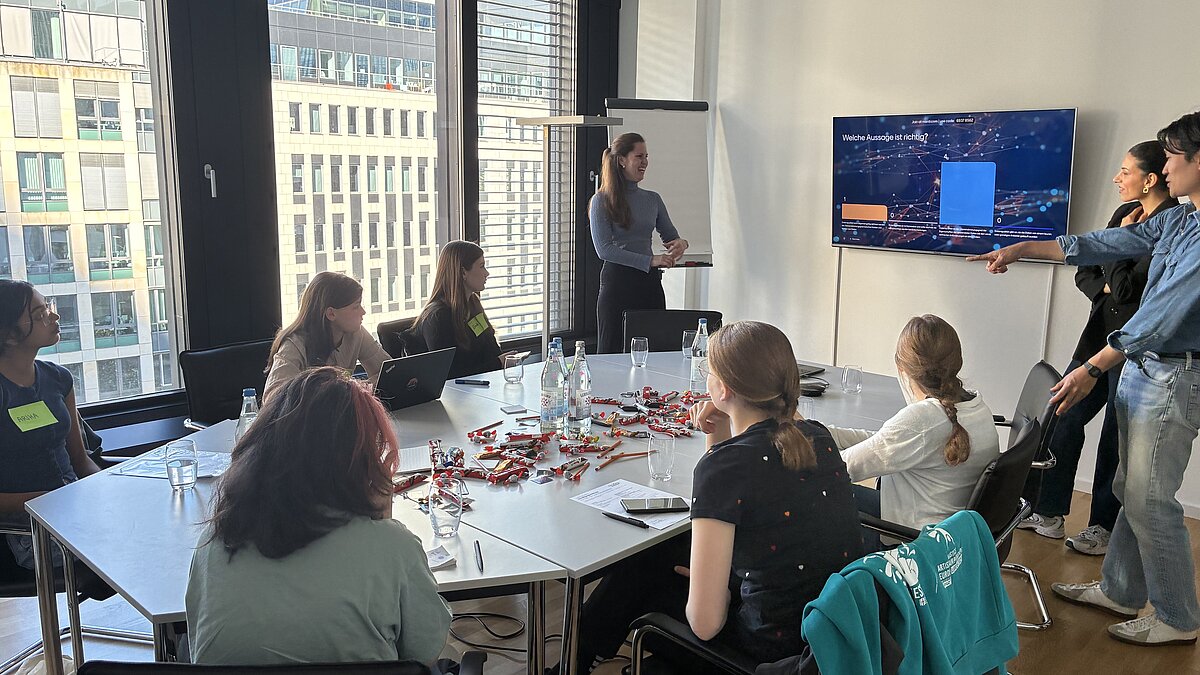
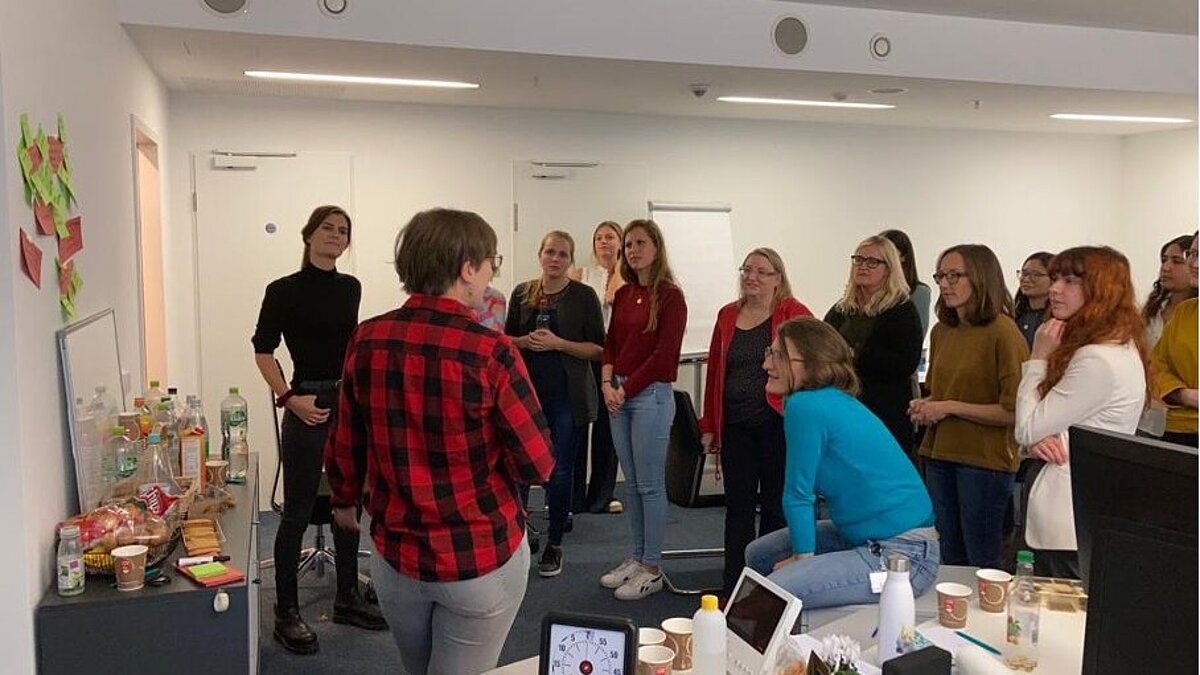
Both our Girls’ Day and the [at]@School workshops always start with an icebreaker activity. It is designed to create an open, trusting learning environment right from the beginning. After this often lively and exciting introduction, we give a brief insight into our own work as Data Consultants. We explain what data product consulting means and how we support companies in making data-driven decisions.
Female Success Stories in Tech
Right after that comes the first highlight of the day: an inspiring keynote from a woman working in tech. For Girls’ Day 2026 in Berlin, we welcomed Dr. Layla Riemann, Team Lead at the Institute of Applied Medical Informatics at the University Medical Center Hamburg-Eppendorf (UKE), joining us via live stream. With great enthusiasm, she showed the students what AI, algorithms, and data can achieve in a medical context. She emphasized AI-supported analysis of MRI scans to assist diagnoses, as well as the use of large language models to translate complex medical terminology into plain language for patients. It was a powerful example of how technology can make a real difference in people’s lives.
In Frankfurt, Girls’ Day was enriched by a live session with Badia Ghamel, IT Project Manager at Union Investment. She shared her personal journey with remarkable openness, speaking about arriving in Germany at a young age and discovering her interest for working with numbers early on. That confidence led her from high school to studying business informatics and eventually earning her master’s degree. Her story was a compelling reminder that curiosity and perseverance often matter far more for a career in tech than having the perfect starting point.
Learning to Understand Data
Next, we dive deeper into the world of data. What actually is data? Where does it come from, and how much of it do we generate every day, often without even noticing? It quickly becomes clear that data is not some abstract IT concept, but something that already plays a constant role in the students’ own lives.
Building on that, we turn to a topic that is often underestimated in practice, yet essential for every data-driven application: data quality. Using vivid examples, often drawing on a bakery with incomplete or faulty sales records, we show why preparing data can be so time-consuming, but also why it is so crucial.
The students then get to apply what they have learned directly in our self-developed AI Adventure. In this interactive online game, designed in the style of a story-based escape game, the girls prepare data themselves and experience firsthand how clean data can be the key to solving a mystery. In the game The Secret Society, they step into a fictional detective story and help the heroine Anna Lytics track down her missing colleague Markus through clever filtering and sorting of data. Working in pairs at the computer, the participants strengthen not only their data literacy, but also teamwork and curiosity.
Understanding AI
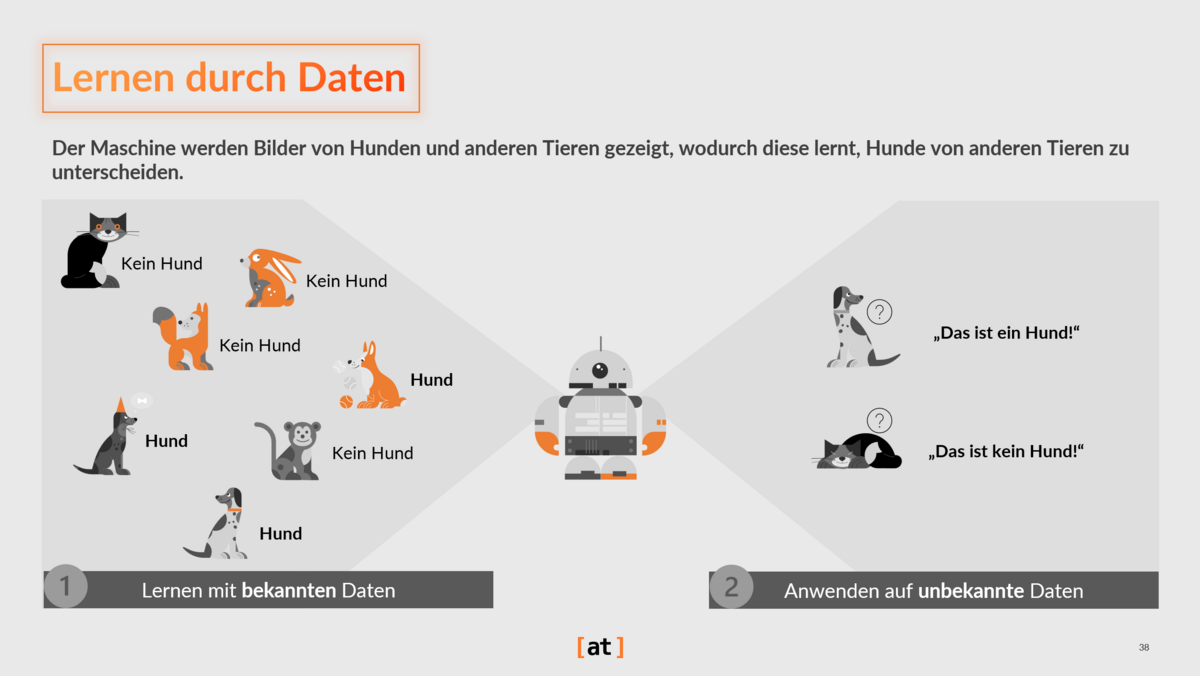
Building on this, we introduce the girls to the fundamentals of machine learning. The goal is not to write code or understand complex algorithms, but to create a basic understanding of the concepts and mathematical ideas behind how machine learning works. We explore what it really means when a computer “learns,” breaking down the principle of supervised learning through the relatable example of classifying images of cats and dogs. This module is highly interactive as well and is accompanied by the second chapter of Anna Lytics’ online escape game adventure.
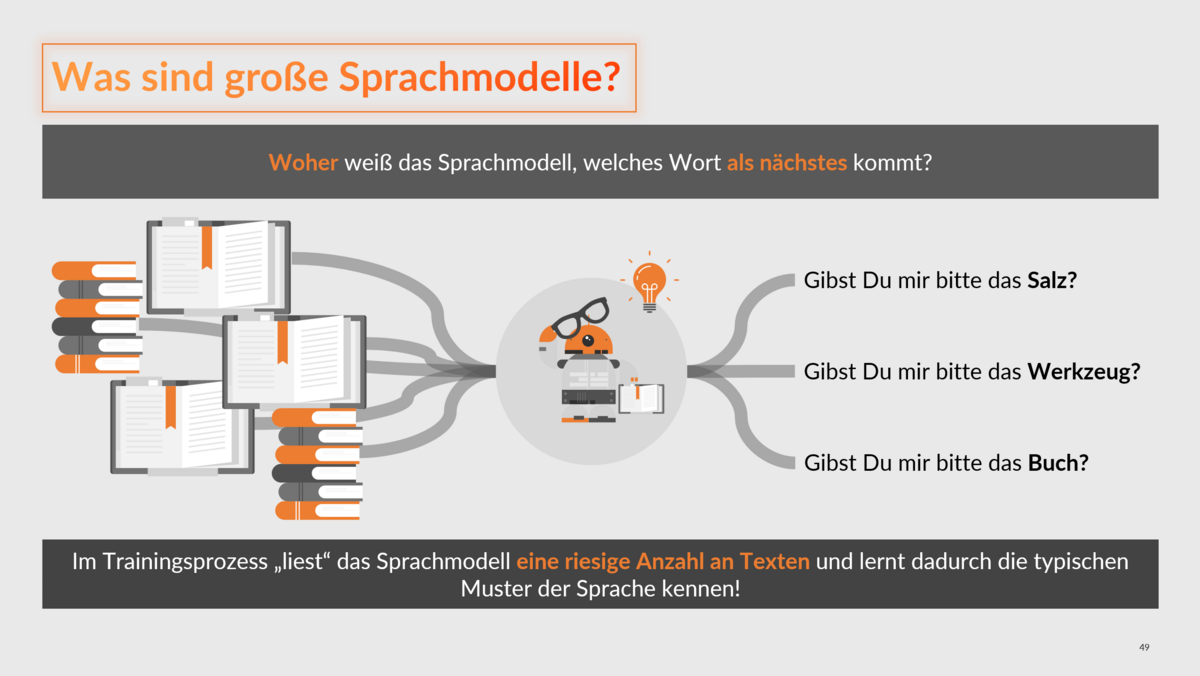
The girls’ interest is especially high when we move on to our deep dive into Large Language Models. Given how omnipresent tools like ChatGPT have become, we want the girls to understand how these models generate their results and make clear that, at their core, they are built on sophisticated statistical probability. Our goal is to provide grounded knowledge that helps the students critically assess AI-generated answers instead of accepting them at face value.
At the same time, we want to avoid creating fear around the technology. That is why we also share practical prompt engineering tips that help improve the quality of results. The students then put this knowledge into practice in the third and final chapter of our gamified exercise, where they refine their prompts step by step to uncover the secrets of a pre-trained language model.
Shaping Technology
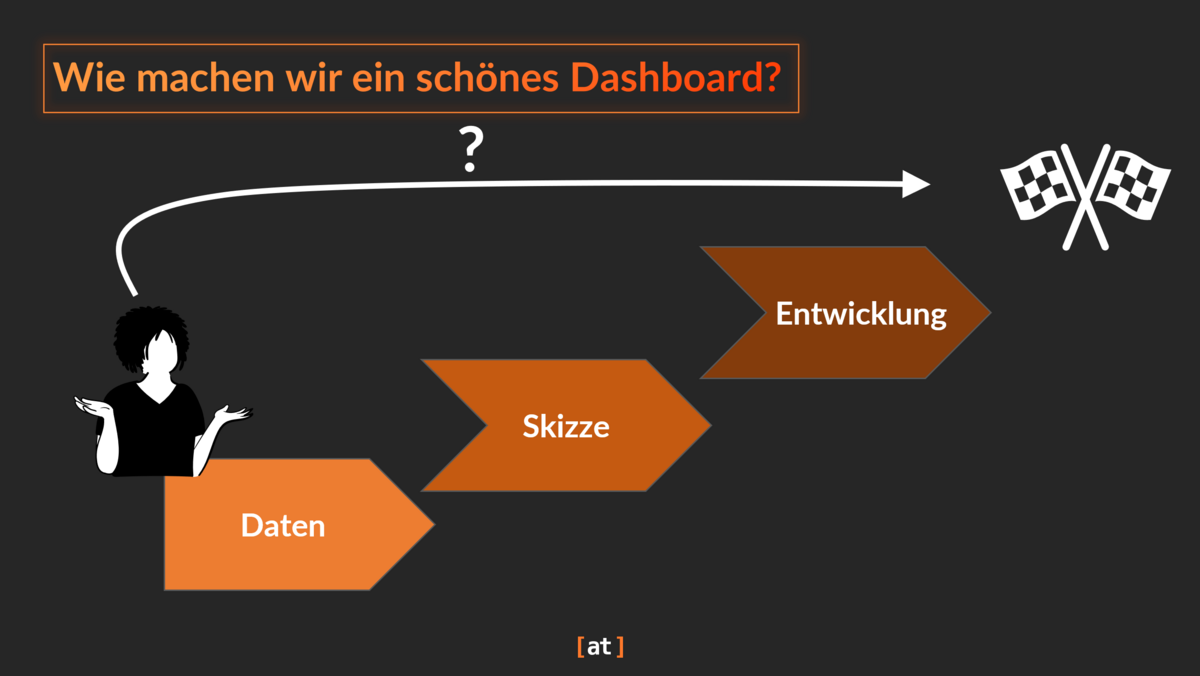
We conclude the day with a hands-on introduction to data visualization using a playful example from everyday life. In small groups, the students work with self-collected Skittles or Smarties data and go through a full visualization process: from structured data collection and initial sketches of possible visual formats to creating simple charts in a professional BI tool.
Here, the key learning goal is to understand how data needs to be prepared in order to communicate information clearly, accessibly, and with purpose. This makes it easy to see why visualizations are often more powerful than plain tables, and how dashboards can help tell complex data stories.
Regardless of the career path they choose later on, by the end of the day the students have gained key skills and knowledge around data and AI. They train their ability to question digital information critically, think logically, and present complex content in a clear and understandable way.
We want to show that technology is neither abstract nor out of reach but something that shapes their everyday lives and their future in very tangible ways. AI should be experienced as a helpful tool that can support, simplify, and open up new possibilities, while also making clear that it is only truly useful when guided by their own critical thinking.
In this way, we help the girls strengthen skills that provide orientation both in school and in everyday life, whether in interpreting statistics, using digital tools and social media, or assessing AI-based results. At the end of the day, the girls leave with the feeling that they can be an active and creative part of this technological world themselves, naturally and confidently as women.
Educational Success Factors
Our educational concept builds on established learning approaches such as activation, application, and reflection, and complements them with modern, technology-driven formats like gamification and digital knowledge checks. This makes learning playful, accessible, and closely connected to the students’ everyday lives.
And this approach pays off: many girls go on to apply for internships or other opportunities after a workshop or Girls’ Day, eager to explore the world of AI and the work at Alexander Thamm [at] more deeply.
Activation
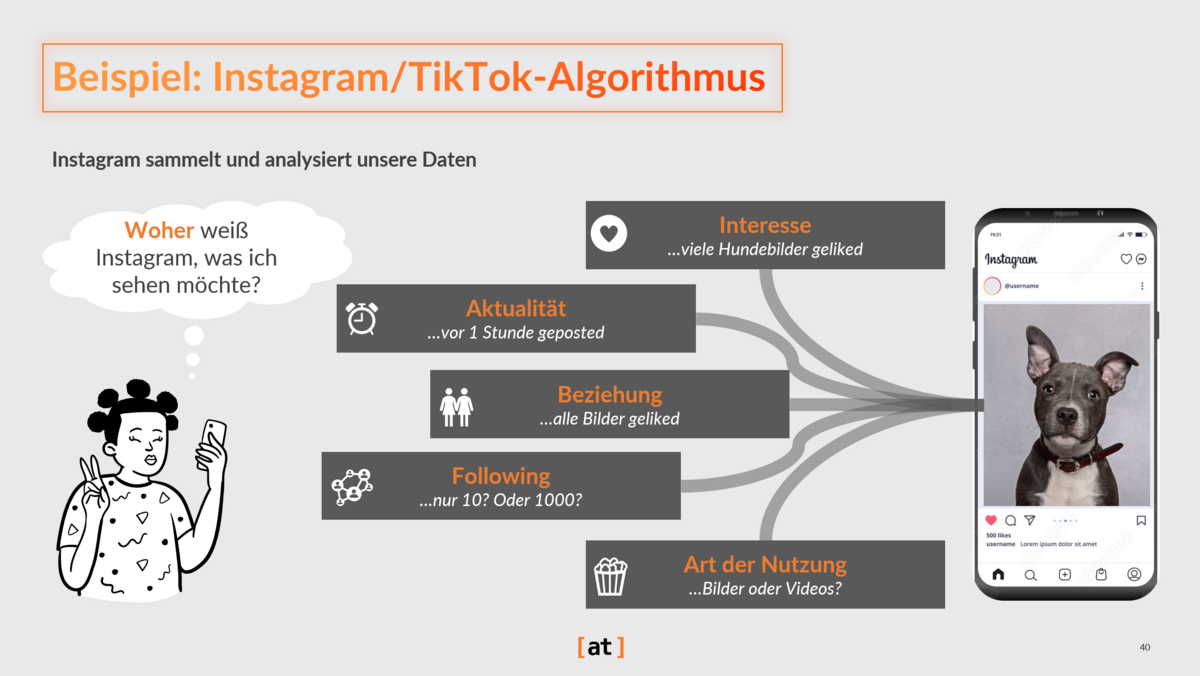
We believe that sustainable learning primarily happens when new knowledge connects meaningfully to existing experiences and can be applied right away. Instead of long lecture-style sessions, we use short content impulses with a strong hook that meets the students in their own everyday world, for example through familiar technologies such as smartphones, smartwatches, and of course TikTok and similar platforms. The goal is to spark curiosity and intrinsic motivation before introducing new concepts. Methodologically, we draw on activating learning approaches that understand learning as an active, self-directed process.
First, we deliberately provide short, focused inputs that introduce key terms and connections without explaining everything in advance. Along the way, we activate existing knowledge through open questions to the group or brief discussion prompts, helping us understand the shared level of knowledge in the room. It often becomes clear very quickly that many basic concepts, such as tables, charts, or simple classifications, are already familiar to the students. Making this prior knowledge visible builds confidence and lowers the barrier to topics that may seem “complex” at first. At the same time, it helps us as trainers establish a common language for the session.
Application
This is followed by our Quick Rounds: short, interactive quiz sequences where the students answer brief multiple-choice or single-choice questions on their phones or computers under time pressure. This phase is not about assessment, but about immediate knowledge recall and playful self-checks. Mistakes are explicitly treated as learning opportunities. At the same time, this format helps us get a sense of which concepts are already known and in what areas further clarification is needed.
In the next step, the students apply what they have learned independently. Working in small groups, they tackle practical tasks that are intentionally designed to be only solvable through collaboration. Peer learning plays a central role here: the students explain concepts to one another, compare approaches, and develop strategies together. This cooperative way of working not only strengthens subject knowledge, but also social skills such as communication, teamwork, and problem-solving. At the same time, learning success is reinforced through the active use of gamification, helping to maintain motivation. This is especially important because topics such as data and algorithms can feel abstract to many people, and attention spans around these subjects are often particularly short. More on that below.
Reflection
Finally, the results are brought together in the full group. Each team explains their approach, reflects on how they arrived at the solution, and discusses which parts were difficult and why. The focus is on putting the thought process into words and demonstrating the path that led to the result. This deliberate act of presenting helps consolidate what has been learned, place it in a broader context, and make it understandable for everyone.
This approach also creates additional learning experiences. The students realize that they already have relevant prior knowledge, learn to structure complex topics, and build confidence in their ability to explore new subjects independently. At the same time, it creates a positive learning atmosphere where asking questions, experimenting, and failing are a natural part of the process.
In summary, our educational concept follows a clear, cyclical learning process: targeted input, active knowledge recall, independent application, and shared reflection. The aim is to make content not only understandable, but tangible, effective, and lasting.
Gamification and Technology as Learning Tools
A central element of our educational concept is the targeted use of gamification and modern technology to create active and engaging learning experiences that are closely connected to the subject matter. For this purpose, our colleagues at [at] developed an age-appropriate yet challenging PC game that follows the protagonist Anna Lytics across three acts. Step by step, the game guides players through real data tasks and helps them apply key concepts such as data preparation, machine learning, and the thoughtful use of language models in practice. We call it our AI Adventure.
Computer-based learning allows us to combine our educational principles with the demands of a modern digital world. Methodologically, it makes abstract concepts immediately tangible and turns learning into an active process centered on experimenting, making decisions, and reflecting. At the same time, working on a computer reflects the technological reality of almost every office-based profession. This creates a learning setting that activates students cognitively, with reactions like “This is just like an escape game” or “I also play Fortnite,” while also preparing them for real-life application scenarios such as googling information, downloading files, and typing on a physical keyboard.
For our Quick Rounds, we use digital tools such as Mentimeter, allowing students to take part in the knowledge checks mentioned earlier via smartphone or, alternatively, laptop. They can see their results in real time, creating a setting that resembles a game show. This type of feedback encourages participation and gives the students a chance to assess their own level of understanding without putting anyone on the spot. At the same time, they learn to use smartphone applications not only for entertainment or social media, but also as productive work tools.
For the more in-depth practice phases, especially the work in the AI Adventure, [at] provides modern laptops. This ensures that all students can participate equally, regardless of their family, financial, or social background. The students always work in pairs on one device, encouraging collaboration, mutual support, and the exchange of different solution strategies. At the same time, working on a computer is itself a key learning goal. While many young people are highly confident using smartphones, confident use of traditional computer systems remains a fundamental skill for school and professional life. Navigating a browser, working with files and folder structures, conducting targeted research, and typing on a computer are all naturally practiced and strengthened throughout the AI Adventure.
By combining media literacy, gamification, real-time feedback, modern hardware, and cooperative learning formats, we create a learning environment that does not use technology for its own sake, but as a targeted medium for participation, equal opportunity, and lasting learning. In doing so, we empower students to use digital tools confidently, thoughtfully, and meaningfully.
Our Lessons Learned
Over the years, our workshops, the [at]@school format, and Girls’ Day in particular have given us valuable insights. They clearly show that successfully teaching complex future-oriented topics such as data and AI depends less on depth of content than on how the content is presented, the atmosphere in the room, and the active involvement of the participants.
The following lessons learned now play a central role in how we structure and design our formats.
Short Input Sessions
One key learning is the deliberate limitation of input phases. We introduce new or abstract content in short, clearly focused sessions lasting 15 to a maximum of 20 minutes. Each input is followed directly by an exercise, discussion, or practical application. This structure helps maintain attention, avoid overload, and make complex topics accessible. We support this with simple language and plenty of examples from the students’ everyday lives, such as social media, streaming platforms, and daily technology use, as well as illustrative slides and handouts.
Staying Active
Most of the day is deliberately dedicated to active participation. Whether through gamified formats, hands-on exercises at the computer, or solving tasks together, independent exploration is at the heart of the experience. We avoid step-by-step instructions and instead focus on tasks that require creative thinking, encourage experimentation, and leave room for different paths to the solution. PCs with internet access allow the students to research independently, test hypotheses, and develop their own answers. As trainers, we see our role as supportive rather than directive. We provide impulses, ask guiding questions, and help the students think further, without giving away the solution too early.
Learning in Teams, a Positive Error Culture, and a Sense of Safety
We see great value in working in small groups. The students work in pairs and support each other very naturally. This peer learning strengthens subject knowledge, confidence, communication skills, and problem-solving abilities. It is particularly encouraging to see how quickly the participants find their way around new digital tools when they are allowed to work together.
At the same time, they practice real work situations, where people rarely work alone and coordination within a team is essential. Teamwork also fosters an appreciative learning environment, which we further support through our consistent use of first names and the clear message that there are no wrong questions or ideas. Especially in a one-day workshop, it is important to quickly reduce embarrassment, hesitation, and performance pressure, and to explicitly encourage asking questions, thinking along, and experimenting, both among the students and in their interaction with us as trainers. Since many Girls’ Day participants do not know each other beforehand, consciously creating a trusting atmosphere is a decisive factor for participation and enjoyment in learning.
Activation Through Movement
Movement also plays an important role in successful learning. Since both school-based learning and our digital working lives involve a lot of sitting, we deliberately include regular activation phases. Playful movement activities, short energizers, and games that get participants moving around the room help boost energy, prevent fatigue, and strengthen group dynamics. These elements are particularly effective early in the day, as they help reduce inhibitions and create an open, relaxed atmosphere. One activity that has proven particularly popular is Cheering Rock-Paper-Scissors. All participants first play rock-paper-scissors in pairs at the same time. The players who lose are not eliminated but instead become cheering supporters. The winners continue to play against each other, collecting more cheering followers with each round, until one final winner emerges.
Insights into Everyday Working Life
Another important learning is how we approach questions about our own everyday work. Rather than making these topics a fixed part of the program, we have found it more effective to let them arise organically, such as during breaks, while working together, or when the students specifically ask. This creates openness and authenticity: the girls gain meaningful insights without the format turning into a Q&A session with prepared answers.
The students are usually interested in very concrete aspects that are relevant to planning their own futures: What does a typical working day actually look like? What do mobile working, an open desk policy, or working from home mean in practice? Is travel part of the job, and if so, how often? Questions about salary, development opportunities, and career progression are also discussed openly. Especially in consulting, it is important to explain how varied projects can be, which industries we work in, and what role data, AI, and communication play in all of this. These conversations help the students develop a more realistic picture of modern working life. They learn that career paths today can be flexible, individual, and actively shaped, and that asking questions is not only welcome, but encouraged.
Successful Women in Tech as Role Models
The strongest and most lasting impact is consistently created through direct exchange with our female guest speakers from the tech industry. We want to give female leaders and experts visible roles and let them share their personal journeys.
The students naturally learn about their work, but also about their career path, which decisions they made, what they studied or learned, which skills matter, and how they balance areas such as family, career, and personal interests. They also hear which hobbies, school subjects, or advanced courses still help them today.
We place particular value on showing non-linear career paths as well, for example by explicitly inviting women who entered the industry from different backgrounds. This makes it clear that the path into IT does not have to be straight or predictable. Through these personal stories, a technical career path becomes tangible and imaginable. Unfortunately, there still aren’t enough female role models like this in the media to strengthen confidence and open up new visions for the future.
Achievements So Far and Plans for the Future
[at]@school has been running regularly at our Munich headquarters for four years now, in close collaboration with a partner school in Munich. We have already inspired several generations of students from grades 7 to 11 to explore the world of data and AI. The initiative has even been featured on Bavarian local television.
Last year, we expanded the program to Berlin and began introducing ten students aged 14 and above to the world of data and AI as part of Girls’ Day. In 2026, we opened our office doors in Berlin and Frankfurt simultaneously for Girls’ Day for the very first time. Looking ahead, we plan to build concrete partnerships with schools in Berlin and Frankfurt so that we can offer these workshops beyond the nationwide Girls’ Day as well.
Conclusion
The students’ enthusiasm has shown us that complex topics such as data processing and AI can be taught in a wonderfully playful and accessible way. Our workshops and Girls’ Day offer many girls their first real insight into the abstract and often unfamiliar role of a data scientist, with great success.
From our experience, one thing is clear: early exposure and targeted support are essential to inspire more women to pursue careers in tech and to introduce these paths at an early stage. We are convinced that investing in the next generation today means investing in a fairer and more future-ready digital world. Diversity in IT is not an end in itself, but a prerequisite for innovation, quality, and social progress. That is why we are especially excited to continue inspiring young people, particularly women, to explore data, AI, and technology together with schools, partners, and dedicated role models.
We look forward to working with you to inspire the next generations for data and AI.
Share this post: